Meet the Marine Protected Areas Between LA and San Diego
What Are Marine Protected Areas?
Imagine a national park, but underwater. That is essentially what a Marine Protected Area (MPA) is, a section of ocean where human activities are limited or prohibited to protect marine life and habitats.
In 2012, California completed one of the most ambitious ocean protection projects in the world: a statewide network of 124 MPAs covering 16% of state waters. Here in Southern California, we have some of the most important ones right in our backyard.
Why MPAs Matter
Marine protected areas work like savings accounts for the ocean. By limiting fishing, collecting, and other disturbances in certain areas, we give marine ecosystems a chance to recover and thrive.
Research shows that MPAs:
- Increase fish populations by 2-4 times inside their boundaries
- Support larger individual fish, which produce exponentially more eggs
- Create "spillover": fish populations grow and spread to surrounding areas
- Protect critical habitats like kelp forests, seagrass beds, and rocky reefs
- Provide baselines for scientific research
MPAs Along Our Coast
Point Dume State Marine Reserve
Location: Malibu Type: State Marine Reserve (no take) Highlights: Dramatic rocky headlands with some of the best kelp forests in the Santa Monica Bay area. Home to garibaldi, sheephead, sea bass, and lobster. A popular spot for kayaking and diving (look, but do not take).
Palos Verdes Peninsula
Location: Rancho Palos Verdes Type: State Marine Conservation Area Highlights: The rocky reefs here support recovering kelp forests and a remarkable diversity of invertebrates. The area is a key site for kelp restoration projects.
Crystal Cove State Marine Conservation Area
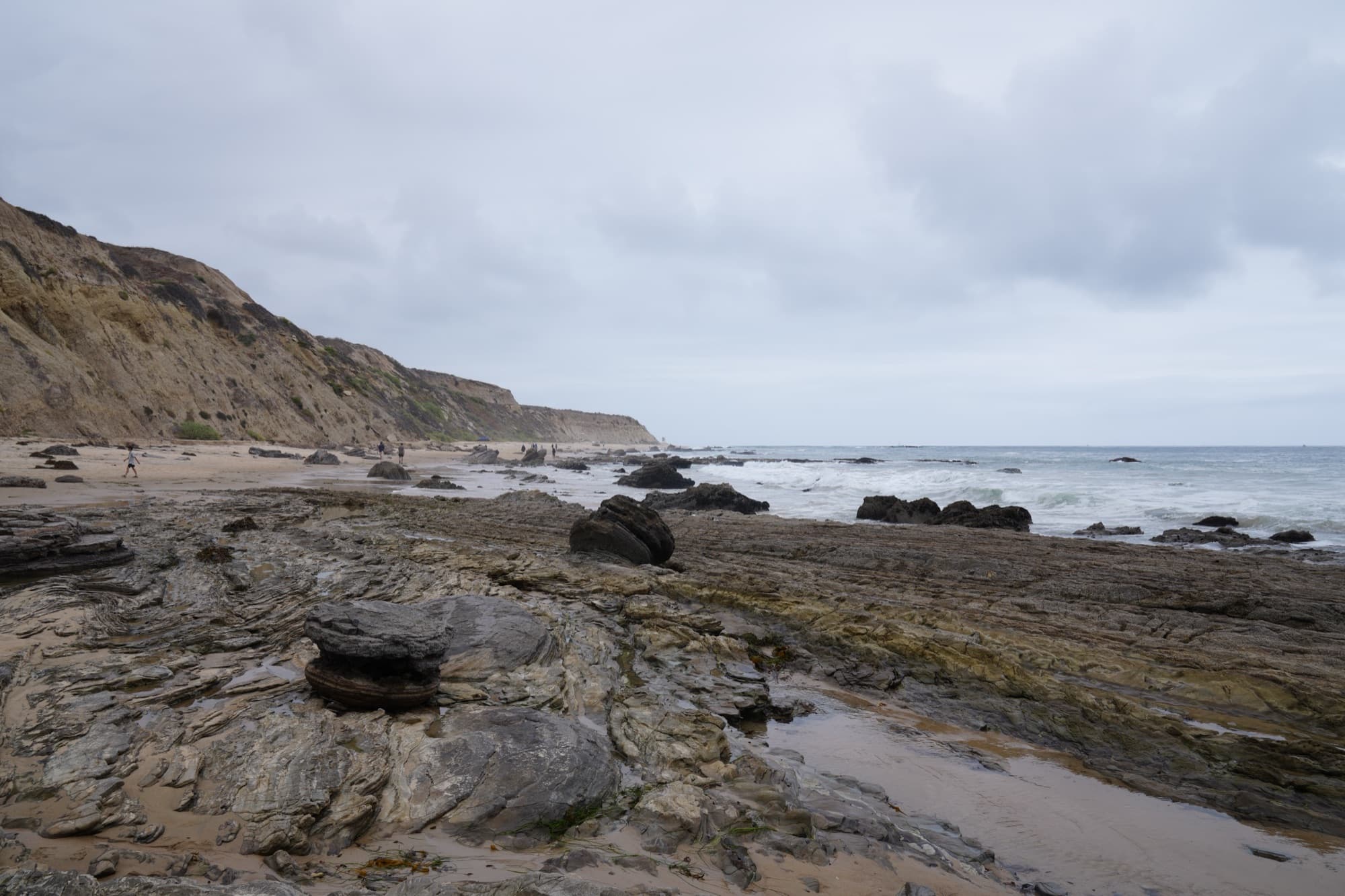
Location: Laguna Beach / Newport Coast Type: State Marine Conservation Area Highlights: One of the most visited MPAs in Southern California. The tide pools at Crystal Cove are legendary, home to sea anemones, hermit crabs, sea stars, and octopuses. Limited fishing is allowed in conservation areas, but collecting is prohibited.
Laguna Beach State Marine Reserve
Location: Laguna Beach Type: State Marine Reserve (no take) Highlights: Protecting some of the most pristine nearshore reefs in Southern California. The underwater park at Laguna is popular with divers who can see bright orange garibaldi, lobster, moray eels, and occasional sea turtles.
Dana Point State Marine Conservation Area
Location: Dana Point Type: State Marine Conservation Area Highlights: Adjacent to the Dana Point Headlands, this MPA protects important habitat for marine mammals. Dana Point is known as the "Dolphin and Whale Capital" of the world, with frequent sightings of dolphins, gray whales, and blue whales.
San Diego-Scripps Coastal State Marine Conservation Area
Location: La Jolla Type: State Marine Conservation Area Highlights: Home to the famous La Jolla Cove, where you can see sea lions, leopard sharks, and garibaldi from shore. The adjacent Birch Aquarium at Scripps Institution of Oceanography is a world-class research facility.
Cabrillo State Marine Reserve
Location: Point Loma, San Diego Type: State Marine Reserve (no take) Highlights: At the tip of Point Loma, this reserve protects kelp forests and rocky reef habitat. Cabrillo National Monument, located nearby, offers some of the best tide pooling in San Diego.
How to Visit Responsibly
MPAs are open for everyone to enjoy, but with some rules:
- Look, do not touch: In marine reserves, you cannot take anything. In conservation areas, limited activities may be allowed
- Stay on trails: When moving through tide pool areas, step on bare rock, not on animals or algae
- Keep your distance: Do not approach or harass marine mammals (it is a federal offense)
- Leave no trace: Pack out everything you bring in
- Report violations: If you see illegal fishing or collecting in an MPA, call the CalTIP hotline: 1-888-334-2258
The Results Are In
Since California's MPA network was established, scientists have documented significant improvements inside protected areas:
- Fish biomass has increased by an average of 25% inside MPAs
- Kelp forests are healthier and more resilient
- Lobster populations are recovering
- Biodiversity is higher inside MPAs compared to unprotected areas
These results prove that when we give the ocean a break, it bounces back.
What You Can Do
- Visit an MPA: Experience these underwater sanctuaries firsthand
- Learn the rules: Know which MPAs are near you and what activities are allowed
- Support MPA enforcement: Report violations and support organizations that advocate for ocean protection
- Spread the word: Many people do not know MPAs exist. Share what you learn with friends and family
- Volunteer with us: OCINW monitors MPA health through beach cleanups and citizen science projects
Our ocean's future depends on places like these, and on people like you who care about protecting them.