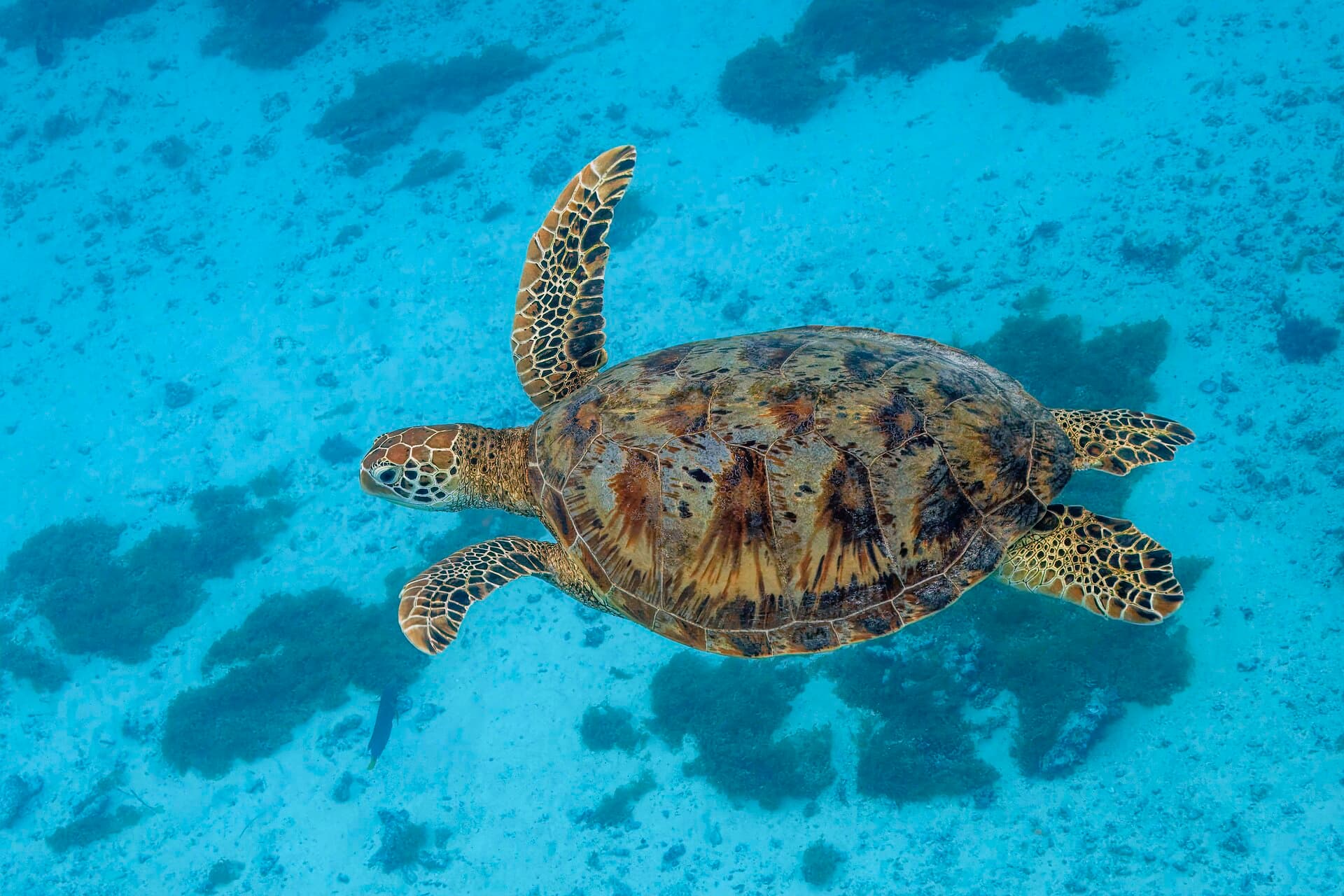
Green Sea Turtle
Chelonia mydas
An Ancient Mariner
The green sea turtle is one of the most ancient and awe-inspiring reptiles on Earth, with ancestors that swam alongside dinosaurs over 100 million years ago. These magnificent marine turtles are among the largest of the seven sea turtle species, with adults typically weighing between 150 and 400 pounds and measuring 3 to 4 feet in shell length. Despite their name, green sea turtles are not green on the outside. Their smooth, heart-shaped shell (called a carapace) ranges from olive to dark brown or nearly black, especially in the Eastern Pacific population sometimes called the "black sea turtle." The name "green" actually comes from the color of their body fat, which takes on a green tint from the sea grasses and algae that make up the adult diet. They have a small, rounded head, large dark eyes, and two paddle-like front flippers that propel them gracefully through the water.
A Life Between Ocean and Shore
Green sea turtles lead remarkable lives that span vast distances and many decades. Females return to the same beach where they were born to lay their eggs, a journey that may carry them hundreds or even thousands of miles across the open ocean. On the nesting beach, the female hauls herself ashore under cover of darkness, digs a deep pit in the sand with her rear flippers, and deposits 100 to 200 eggs before covering the nest and returning to the sea. After about 60 days of incubation, tiny hatchlings (only about 2 inches long) emerge and make a desperate dash to the ocean, guided by the reflected light of the moon and stars on the water. Those that survive the gauntlet of predators spend their early years drifting in ocean currents, feeding on jellyfish, small invertebrates, and floating algae. As juveniles, they shift to a primarily herbivorous diet and settle in coastal areas with abundant seagrass beds.
Gardeners of the Sea
Green sea turtles play a vital ecological role as one of the few large marine herbivores. By grazing on seagrass beds, they keep the grass short and healthy, preventing it from growing too tall and blocking sunlight from reaching the seafloor. Well-grazed seagrass beds are more productive and support a greater diversity of marine life than ungrazed beds. This "gardening" effect has earned green sea turtles the nickname "lawnmowers of the sea." Their grazing also helps cycle nutrients, as their waste fertilizes the seagrass and surrounding waters. In coral reef ecosystems, green turtles graze on algae that might otherwise overgrow and smother corals. The loss of green sea turtles from an ecosystem can trigger a cascade of negative effects, including seagrass die-offs, reduced water clarity, and declining fish populations.
San Diego's Resident Turtles
Southern California is home to one of the northernmost year-round populations of green sea turtles in the Eastern Pacific, and it is centered right in San Diego Bay. Beginning in the 1850s, green turtles were observed in the warm waters of the bay, and a resident population has persisted there despite centuries of human development. The turtles were historically attracted to the warm-water discharge from the South Bay Power Plant, which created a pocket of tropical-temperature water in the otherwise cool Southern California ocean. Even as the power plant has changed operations, the turtles remain. Researchers from the San Diego Sea Turtle Monitoring Network have identified and tracked individual turtles in the bay, documenting their movements, growth rates, and health. Snorkelers at La Jolla Cove also regularly encounter green sea turtles gliding through the clear waters, and these gentle encounters have become a cherished part of the La Jolla experience.
Endangered but Fighting Back
Green sea turtles are listed as Endangered under both the U.S. Endangered Species Act and the IUCN Red List. Their populations were devastated by centuries of harvesting for meat, eggs, and shells, and they continue to face serious threats from human activities. Bycatch in fishing nets kills thousands of sea turtles worldwide each year. Plastic pollution is an insidious threat: turtles mistake floating plastic bags for jellyfish, one of their favorite foods, and ingesting plastic can cause fatal intestinal blockages. Coastal development destroys nesting beaches, and artificial lighting on beaches disorients hatchlings, drawing them away from the ocean and toward roads and buildings. Climate change poses a unique threat because sea turtle sex is determined by incubation temperature. Warmer sand produces more females, and rising temperatures could skew sex ratios to unsustainable levels. Despite these challenges, conservation efforts are making a difference. Beach protections, fishing regulations requiring turtle excluder devices, and public awareness campaigns have helped green sea turtle populations stabilize and even grow in many areas. Every plastic bag you refuse and every piece of litter you pick up from the beach is a small act that helps these ancient mariners survive.