Garibaldi
Hypsypops rubicundus
California's Underwater Jewel
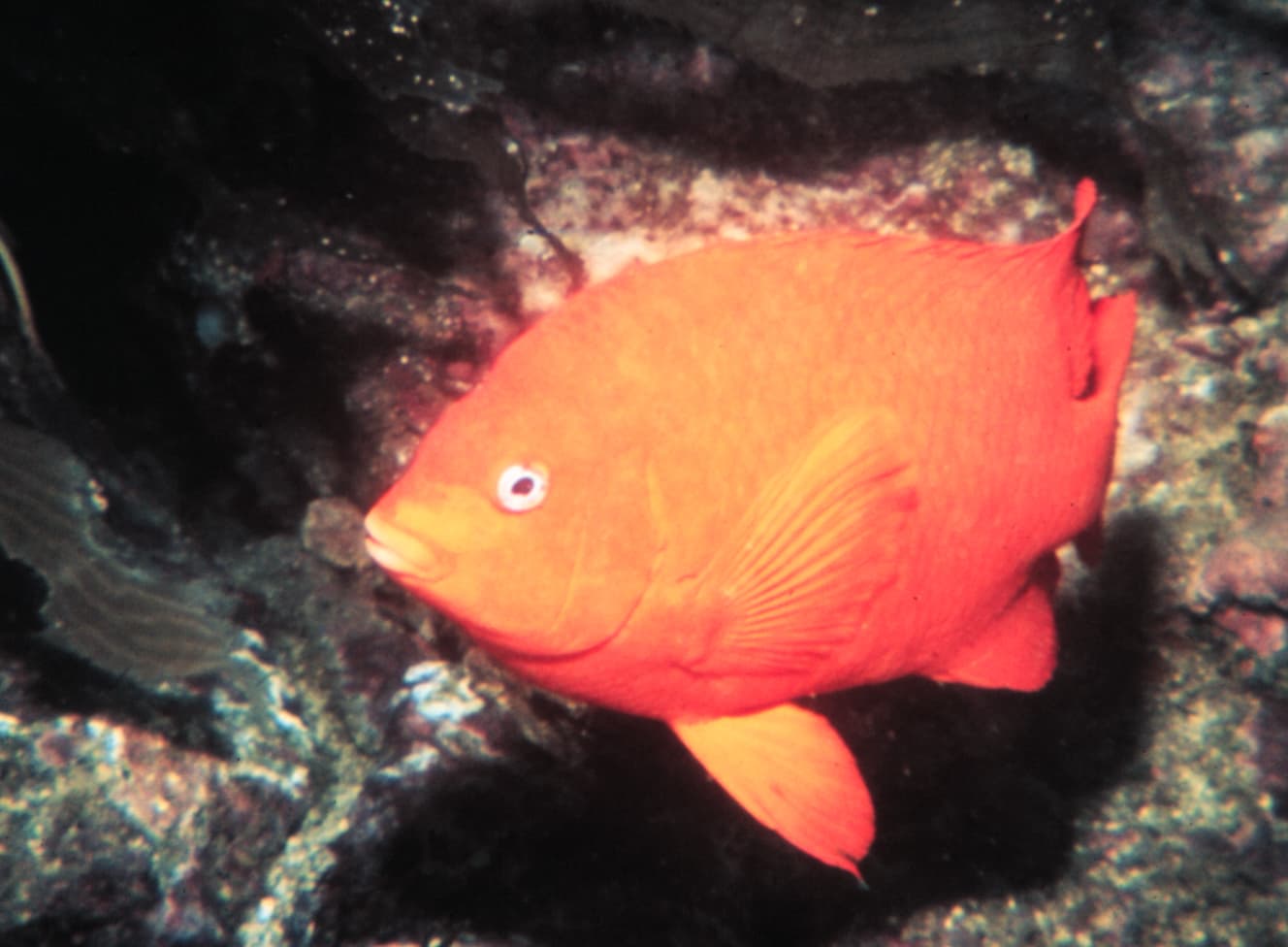
The garibaldi is one of the most visually stunning fish in the Pacific Ocean and an unmistakable icon of Southern California's underwater world. Adults are a vivid, solid orange, so bright they seem to glow against the dark greens and browns of the rocky reef. They are stocky, oval-shaped fish that grow to about 14 inches long and can weigh up to 2 pounds. Their scales have a slightly rough texture, and they have a small mouth with thick lips, large dark eyes, and a single long dorsal fin that runs along their back. Juveniles are even more eye-catching, displaying brilliant orange bodies decorated with shimmering, electric-blue spots that gradually fade as the fish matures. The garibaldi was designated California's official state marine fish in 1995, making it one of the most legally protected reef fish in the state.
Fiercely Territorial Homebodies
Garibaldis are not the shy, retiring type. These damselfish are fiercely territorial, and males in particular will aggressively defend their patch of reef against any intruder, including fish many times their size, curious octopuses, and even human divers. During nesting season, which runs from March through October, males prepare a carefully maintained nest site on a flat section of rock. The male cultivates a garden of specific red algae on the nest surface, trimming away unwanted species until the nest meets his standards. Once a female inspects the nest and approves, she deposits her eggs in a neat layer. The male then guards and aerates the eggs for two to three weeks, fanning them with his fins to ensure proper oxygen flow, until the tiny larvae hatch and drift away into the plankton.
Keystone of the Kelp Forest
Although garibaldis may seem like just a pretty face, they play an important ecological role in Southern California's kelp forest and rocky reef ecosystems. As omnivores, they feed on sponges, bryozoans, small invertebrates, and algae growing on the reef surface. Their grazing helps control the growth of certain organisms that might otherwise overgrow the reef and smother corals and other sessile animals. Their territorial behavior also creates a patchwork of micro-habitats on the reef, as the algae gardens they cultivate within their territories differ from the surrounding reef surface. These patches of managed habitat increase overall biodiversity. As prey for larger predators like moray eels, giant sea bass, and harbor seals, garibaldis also serve as an energy link between the reef and the broader food web.
A SoCal Diving Icon
For snorkelers and scuba divers in Southern California, spotting a garibaldi is practically guaranteed, and always a highlight. The clear waters around Catalina Island's Casino Point Dive Park are famous for their dense garibaldi populations, where the brilliant orange fish hover over the reef like living ornaments. In La Jolla, the Ecological Reserve's protected waters support healthy garibaldi numbers that delight snorkelers year-round. The coves of Laguna Beach, including Shaw's Cove and Diver's Cove, offer some of the most accessible garibaldi viewing from shore. Crystal Cove State Park near Newport Beach is another excellent spot where even beginning snorkelers can observe these charismatic fish in shallow water. Because garibaldis are curious and territorial rather than timid, they often swim right up to divers for a closer look.
Protected by Law, Challenged by Change
While garibaldis are classified as Least Concern globally, they hold a special protected status in California. Since 1995, it has been illegal to take or possess a garibaldi in California waters. Doing so is a misdemeanor that can result in fines. This protection was enacted in part because garibaldis were historically overcollected for the saltwater aquarium trade, their brilliant color making them highly desirable. Today, the greater threat to garibaldis comes from habitat loss. Warming ocean temperatures and the overgrazing of kelp by exploding purple sea urchin populations have devastated kelp forests in many parts of California, leaving garibaldis with less shelter and fewer food resources. Ocean acidification, pollution from coastal runoff, and sedimentation further degrade the rocky reef habitats these fish depend on. By supporting kelp forest restoration and keeping our coastal waters clean, we help protect the underwater home of California's most dazzling fish.