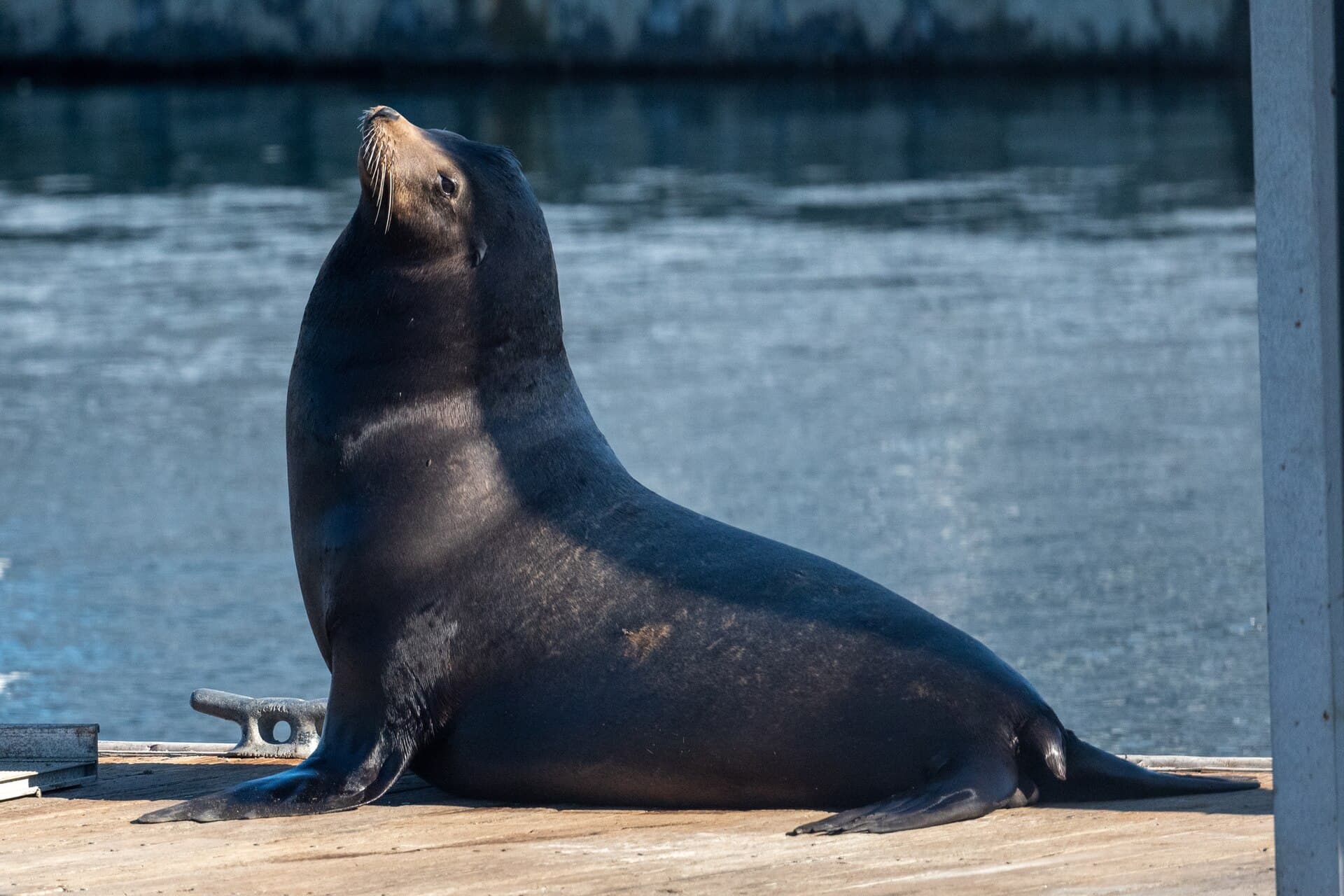
California Sea Lion
Zalophus californianus
The Barking Stars of the Coast
If you have ever visited a Southern California harbor and heard a chorus of loud, rhythmic barking, you have met the California sea lion. These charismatic marine mammals are among the most recognizable and beloved animals along our coast. Males are large and muscular, reaching up to 7 feet long and 850 pounds, with dark chocolate-brown fur and a distinctive bony ridge on top of their heads called a sagittal crest. Females are smaller and more slender, typically around 6 feet and 220 pounds, with lighter tan or golden-brown fur. Both sexes have long, dog-like snouts, external ear flaps (which distinguish them from true seals), and large, expressive eyes. Their powerful front flippers allow them to "gallop" on land and rocket through the water at speeds up to 25 miles per hour.
Life on Land and Sea
California sea lions are equally at home on rocky shores and in the open ocean. They are highly social animals that gather in large groups called colonies, sometimes numbering in the hundreds or even thousands on popular haul-out sites. On land, they can be noisy neighbors. Males bark loudly to establish territories during breeding season, which runs from May through August on the Channel Islands. Females give birth to a single pup about a year after mating and nurse their young for six months to a year. In the water, sea lions are graceful and acrobatic hunters. They use their excellent vision and sensitive whiskers to locate prey, diving to impressive depths of nearly 900 feet. Their diet includes squid, anchovies, sardines, mackerel, and rockfish.
Ecosystem Connectors
California sea lions serve as vital links in the marine food web. As mid-level predators, they help regulate populations of schooling fish and squid, while also serving as prey for larger predators like great white sharks and orcas. Their nutrient-rich waste fertilizes nearshore waters and kelp forest ecosystems. When sea lions haul out on islands and rocky shores, their droppings transfer marine nutrients onto land, supporting coastal plant communities and the insects and birds that depend on them. Scientists also consider sea lions a "sentinel species," because they eat many of the same fish that humans do, health problems in sea lion populations often serve as early warnings of broader ocean health issues.
Sea Lions and SoCal Culture
California sea lions are woven into the fabric of Southern California coastal life. At La Jolla Cove in San Diego, visitors gather daily to watch dozens of sea lions lounging on the rocks, surfing in the waves, and playing in the shallows. In harbors from Redondo Beach to Oceanside, sea lions claim docks and buoys as their personal lounging spots, sometimes to the frustration of boat owners. The Channel Islands, particularly San Miguel and Santa Barbara Islands, host some of the largest breeding colonies in the world. These islands are accessible by boat from Ventura and Oxnard, offering unforgettable wildlife viewing opportunities. Local marine mammal rescue organizations, including the Pacific Marine Mammal Center in Laguna Beach, rehabilitate dozens of sick and injured sea lions each year.
Thriving but Not Without Threats
The California sea lion population is healthy and growing, currently estimated at over 250,000 individuals. This is a conservation success driven by the Marine Mammal Protection Act of 1972, which made it illegal to hunt, harass, or kill marine mammals in U.S. waters. However, these animals still face serious threats. Harmful algal blooms produce a toxin called domoic acid that accumulates in fish and causes devastating neurological damage in sea lions that eat them. Rescue centers see surges of domoic acid cases almost every spring. Entanglement in fishing gear remains a persistent problem, with sea lions sometimes found wrapped in monofilament line or wearing plastic packing bands around their necks. Climate-driven changes in ocean temperature can shift fish populations, leaving sea lions struggling to find food. By supporting marine mammal rescue organizations and working to keep our coastal waters clean, we can help ensure these charismatic animals continue to thrive.