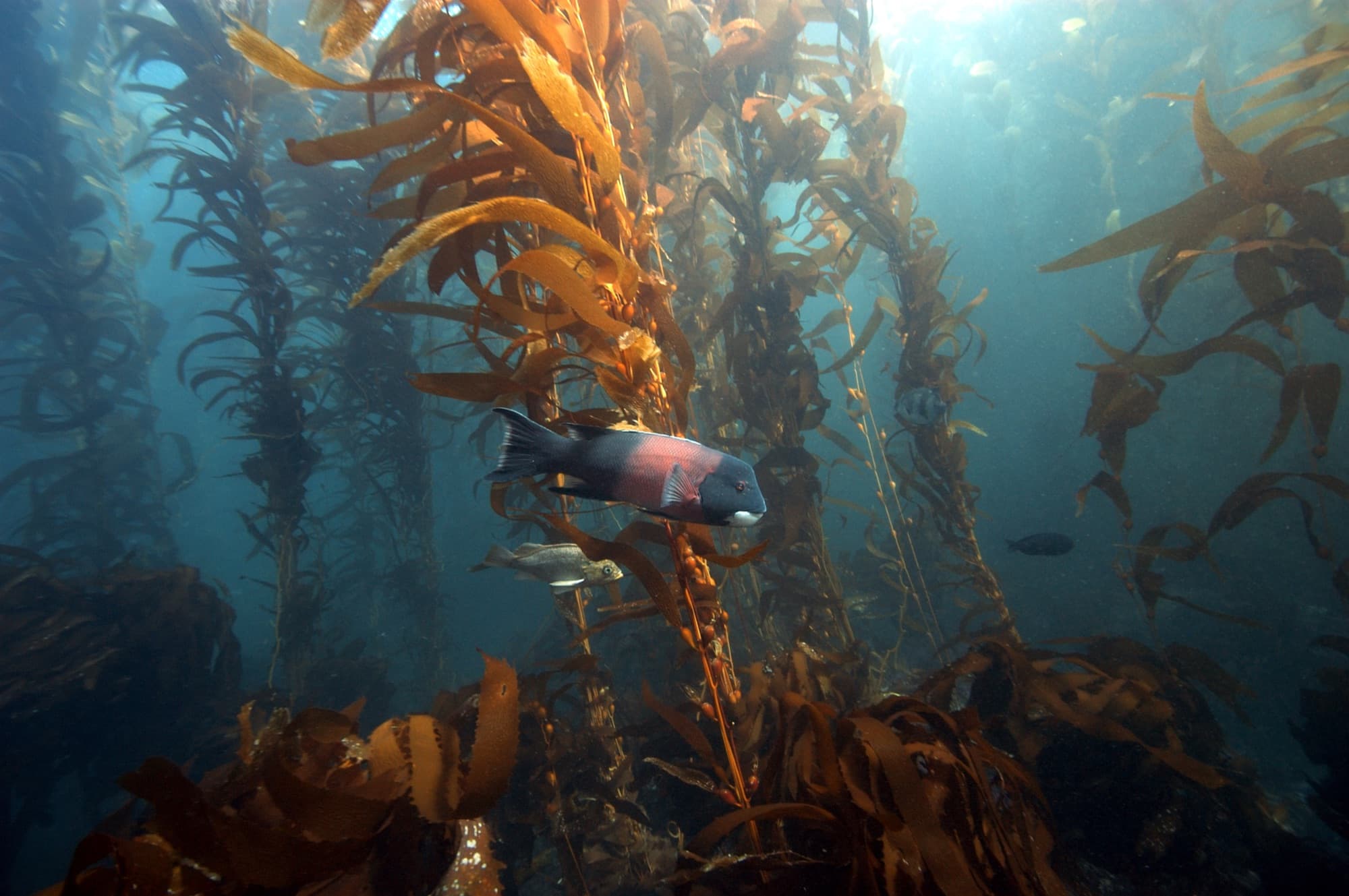
Kelp Forests
Coastal waters of Southern California, from Palos Verdes to the Mexican border
The Underwater Forests of Southern California
Imagine a forest where the trees grow from the ocean floor and stretch upward toward the sunlight, swaying gently with every passing wave. That is exactly what a kelp forest is. Giant kelp, the dominant species in Southern California's underwater forests, is one of the fastest-growing organisms on Earth, capable of growing up to two feet in a single day. These towering algae create a layered canopy much like a forest on land, with a sunlit top layer, a shaded middle layer, and a dimly lit floor teeming with life. Kelp forests are among the most productive and biodiverse ecosystems on the planet, rivaling even tropical rainforests in the density of life they support.
Where to Find Kelp Forests in SoCal
Southern California is one of the best places in the world to experience kelp forests firsthand. The cold, nutrient-rich waters that sweep along our coastline create ideal growing conditions. At La Jolla Cove, snorkelers and divers can glide through dense kelp canopies just offshore. The kelp beds off Point Loma are some of the most studied in the world, monitored by researchers for decades. Around Catalina Island, crystal-clear water makes the underwater forests especially spectacular, and the rocky reefs off Palos Verdes support thriving kelp communities that have rebounded after years of restoration work. Even from shore, you can often spot the golden-brown canopy of kelp floating on the surface, marking the forest below.
A Web of Life Among the Fronds
Kelp forests are home to an incredible network of interconnected species. The bright orange Garibaldi, California's state marine fish, fiercely guards its territory among the fronds. Sheephead fish, with their powerful jaws, crunch through sea urchin shells, helping keep urchin populations in check. Leopard sharks patrol the sandy patches between kelp stands, hunting for small fish and invertebrates. Sea urchins graze on kelp holdfasts and fallen blades, and when their populations are balanced, they play a healthy role in recycling nutrients. Historically, sea otters were the keystone predators that kept urchins under control, but their numbers were decimated by the fur trade. Without enough otters or other urchin predators, the balance can tip dangerously. Hundreds of other species, from tiny nudibranchs to massive black sea bass, depend on this ecosystem for food, shelter, and nursery habitat.
Threats Facing Our Kelp Forests
Southern California's kelp forests are under serious pressure from multiple directions. Warming ocean temperatures caused by climate change stress kelp, which thrives in cool water. When the water gets too warm, kelp grows slowly, weakens, and can die off entirely. At the same time, populations of purple sea urchins have exploded in recent years. Without enough predators to keep them in check, these urchins devour kelp at its base, creating barren wastelands on the ocean floor called "urchin barrens" where almost nothing else can survive. Pollution from stormwater runoff carries fertilizers, pesticides, and plastics into nearshore waters, reducing water clarity and smothering kelp. Sedimentation from coastal construction clouds the water and blocks the sunlight kelp needs to photosynthesize. And ocean acidification, caused by rising carbon dioxide levels, makes it harder for many shell-building organisms in the kelp forest to survive.
What You Can Do to Help
The good news is that kelp forests are resilient. When conditions improve, they can bounce back remarkably fast, and young people are already making a real difference. You can start by reducing pollution at the source: participate in beach and storm drain cleanups, use reef-safe sunscreen, and help your family reduce plastic use at home. Learn about and support Marine Protected Areas (MPAs), which give kelp forests safe spaces to recover by limiting fishing and other disturbances. Some organizations run kelp restoration programs where trained divers remove excess purple urchins and replant kelp, and teenagers can get involved through volunteer diving programs. You can also become a citizen scientist by reporting kelp conditions through programs like Reef Check California. Perhaps most importantly, talk about kelp forests with your friends and family. Most people have no idea that these incredible underwater forests exist right off our beaches, and awareness is the first step toward protection.