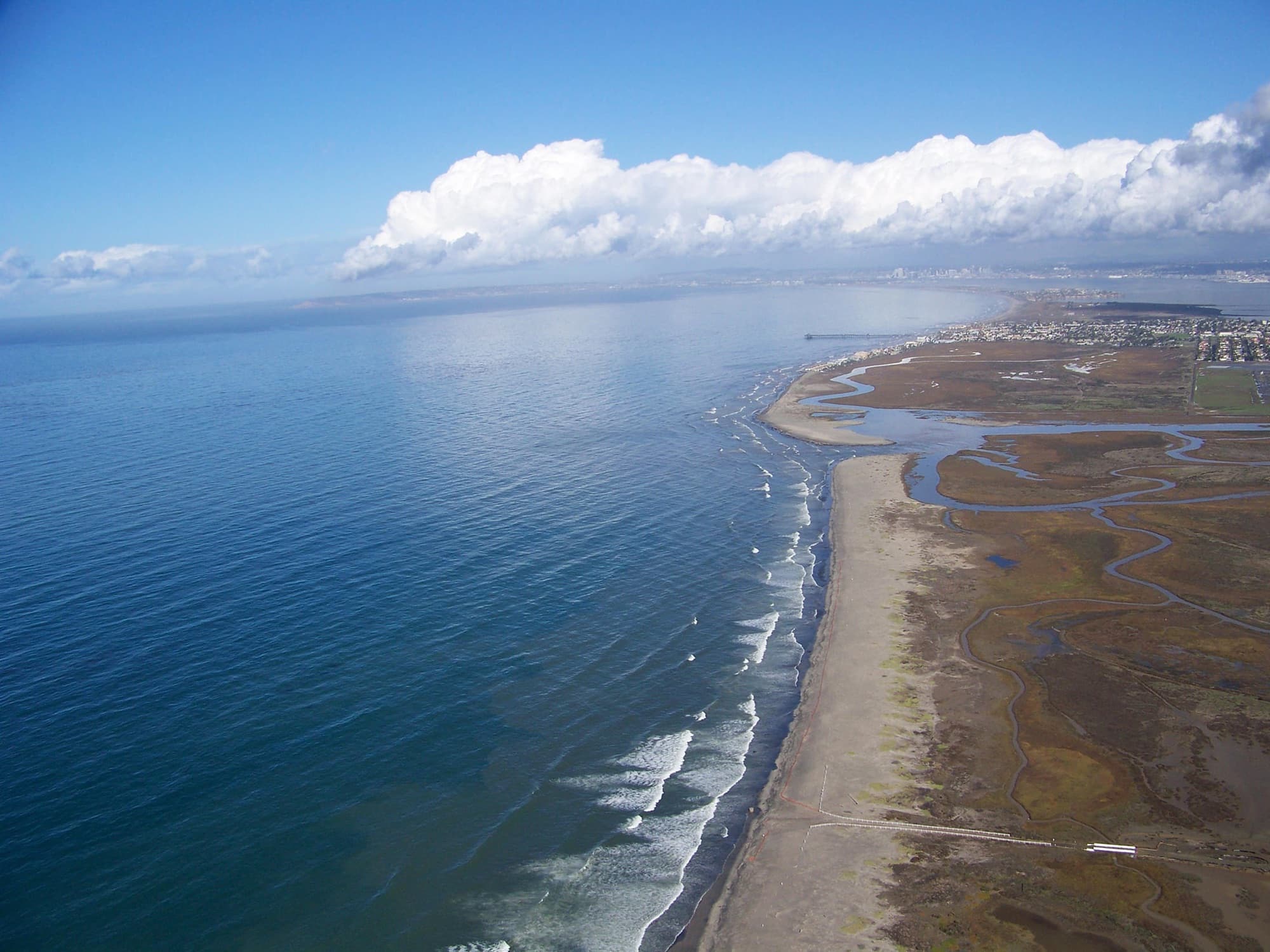
Coastal Wetlands & Estuaries
Lagoons, salt marshes, and river mouths along the Southern California coast
Where Rivers Meet the Sea
Coastal wetlands and estuaries are the places where freshwater from rivers and streams mixes with saltwater from the ocean. This blending creates a unique habitat that is neither fully fresh nor fully salt, but something in between called brackish water. These transitional zones include salt marshes, mudflats, tidal channels, and lagoons, and they are among the most ecologically valuable landscapes on the planet. Acre for acre, coastal wetlands produce more living material than almost any other ecosystem, including tropical rainforests. They serve as nurseries for fish, feeding grounds for migratory birds, natural water filters, flood buffers, and carbon storage vaults. Yet they are also among the most endangered habitats in Southern California. More than 90 percent of the region's original coastal wetlands have been filled, paved, or drained for development, making every remaining acre critically important.
Finding SoCal's Surviving Wetlands
Despite decades of loss, several remarkable wetland areas survive along the Southern California coast, and many are open for you to explore. Bolsa Chica Ecological Reserve in Huntington Beach is one of the great restoration success stories in California. Once slated for a marina development, community advocacy saved it, and today it supports over 200 bird species across its restored tidal basins and mesas. Batiquitos Lagoon in Carlsbad is a serene coastal lagoon with trails where you can watch herons fish and osprey dive. The Tijuana River Estuary at the U.S.-Mexico border is the largest remaining coastal wetland in Southern California and a critical stop on the Pacific Flyway, the bird migration route that stretches from Alaska to Patagonia. And the Ballona Wetlands in Los Angeles, sandwiched between Marina del Rey and Playa del Rey, represent the last significant wetland in the LA basin and are currently undergoing a major restoration effort.
The Creatures of the In-Between World
Wetland species are specialists adapted to life in a constantly changing environment where water levels, salinity, and temperature shift with every tide and every rain. The Western snowy plover, a small shorebird listed as threatened under federal law, nests on the sandy edges of wetlands and depends on undisturbed habitat to raise its chicks. Great blue herons stand motionless in shallow water, waiting with remarkable patience before striking at fish with lightning speed. The Pacific chorus frog, one of the few amphibians that can tolerate slightly brackish conditions, fills spring evenings with its distinctive two-note call. Beneath the surface, fiddler crabs wave their oversized claws in territorial displays while aerating the mud with their burrows, a behavior that is essential for marsh health. And the unassuming pickleweed, a succulent plant that turns vivid red in fall, forms the foundation of the salt marsh ecosystem, stabilizing sediment, filtering pollutants, and providing food and shelter for countless invertebrates. Together, these species form an interconnected community where the loss of any one member affects all the others.
A Habitat Under Siege
Coastal wetlands face more simultaneous threats than almost any other ecosystem in our region. Historically, the biggest threat has been development. Wetlands were viewed as wastelands to be filled and built upon, which is how Southern California lost more than 90 percent of its original wetland acreage. Today, the remaining wetlands face pollution from urban and agricultural runoff. Pesticides, fertilizers, heavy metals, and trash flow into these low-lying areas during every rainstorm, degrading water quality and poisoning wildlife. Invasive species like non-native cordgrass and the New Zealand mud snail outcompete native plants and animals, altering the structure and function of the entire ecosystem. Sea level rise threatens to drown existing marshes if they cannot migrate inland, and in many places buildings and roads block that migration. Perhaps the most insidious threat is altered hydrology, meaning changes to the natural flow of water. Dams, channels, and storm drains have fundamentally changed when and how much freshwater reaches our estuaries, disrupting the delicate balance of salt and fresh water that wetland species depend on.
Restoring What Was Lost
The story of coastal wetlands is not all loss. Some of the most inspiring conservation work in Southern California is happening right now in these habitats, and young people are playing a central role. You can volunteer with wetland restoration projects, pulling invasive plants, planting native species like pickleweed and saltgrass, and monitoring water quality. Organizations like the Bolsa Chica Conservancy, Batiquitos Lagoon Foundation, and Friends of Ballona Wetlands actively recruit youth volunteers and offer educational programs. Bird monitoring is another way to contribute. Programs like the Christmas Bird Count and eBird allow you to submit observations that scientists use to track bird populations and migration patterns. You can advocate for wetlands in your community by attending city council meetings when development projects near wetlands are proposed, and by writing letters to elected officials. Even simple actions matter: reducing water waste at home helps ensure that rivers and streams deliver the freshwater that estuaries need, and picking up litter in your neighborhood prevents it from washing downstream into these sensitive habitats. The wetlands that remain are small, but they are mighty, and every effort to protect them counts.