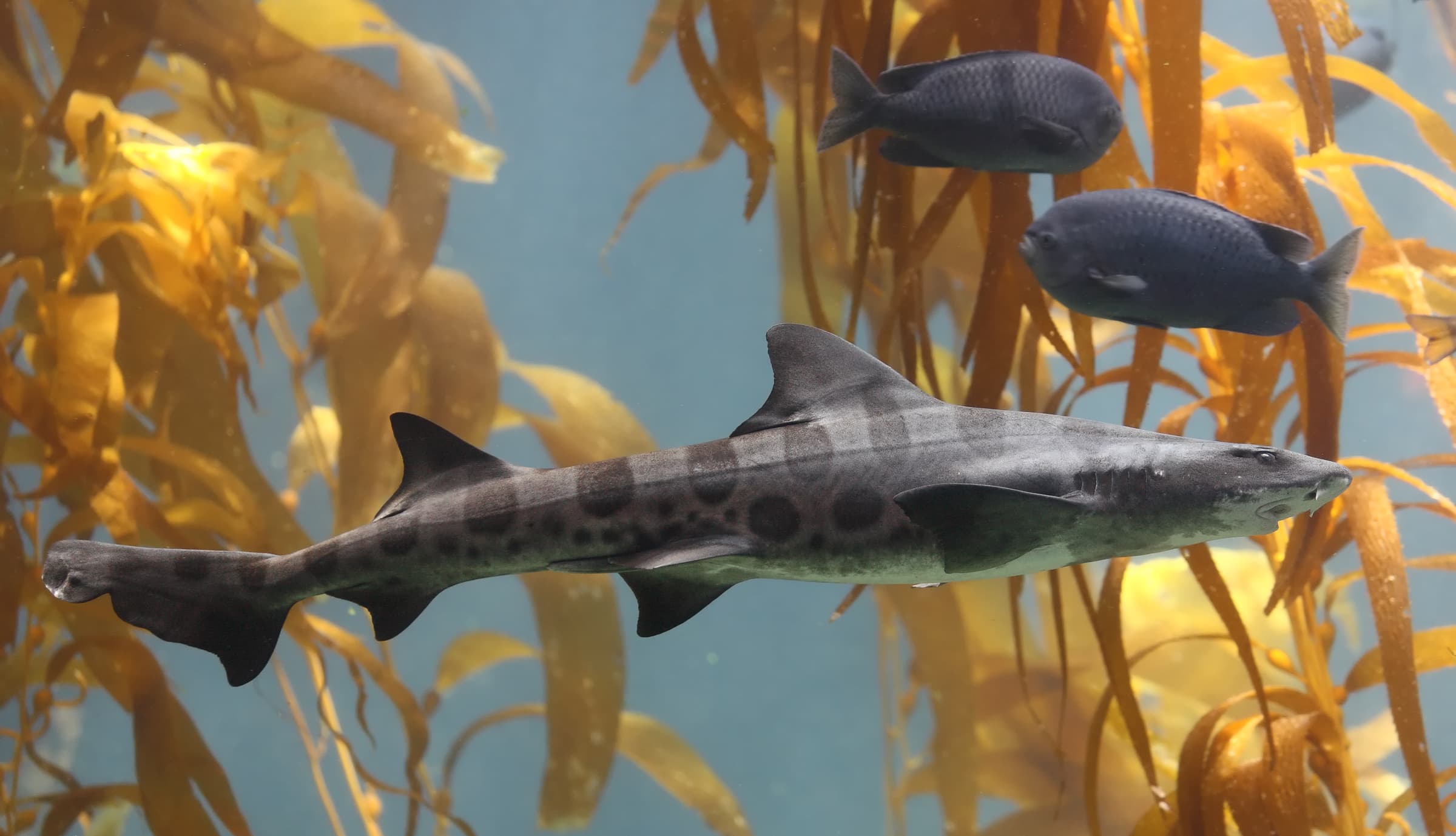
Leopard Shark
Triakis semifasciata
The Spotted Swimmer
The leopard shark is one of the most beautiful and approachable sharks in the Pacific Ocean. Named for the distinctive dark saddle-shaped markings and spots that run along its silvery-gray back, this slender, graceful shark looks like it was painted by an artist. Adults typically grow to 4 to 5 feet in length, with females slightly larger than males. Their body is streamlined and torpedo-shaped, with a flattened head, large oval eyes, and a short rounded snout. The dark bars and spots on their back serve as camouflage, breaking up their outline against the dappled light of sandy shallows. Unlike the image of sharks in movies, leopard sharks are gentle, shy animals that pose absolutely no danger to humans. They have small teeth designed for crushing crabs and clams, not for biting large prey, and there has never been a verified unprovoked attack on a person.
Masters of the Shallows
Leopard sharks are supremely adapted to life in the shallow, nearshore waters of the California coast. They are bottom-dwelling sharks that cruise sandy flats, mud bottoms, kelp forests, and rocky reefs, usually in water less than 20 feet deep. They use a suite of remarkable senses to find food. In addition to sharp eyesight and an acute sense of smell, leopard sharks possess electroreceptors called ampullae of Lorenzini, tiny gel-filled pores on their snout that can detect the faint electrical fields generated by the heartbeat and muscle contractions of prey buried in the sand. Their diet includes crabs, shrimp, clam siphons, fish eggs, small fish, and fat innkeeper worms. Leopard sharks are ovoviviparous, meaning the eggs develop and hatch inside the mother's body. After a gestation period of about 10 to 12 months, females give birth to live pups, anywhere from 4 to 37 at a time, each about 8 inches long and fully independent from birth.
Balancing the Bottom
As mesopredators (mid-level predators in the food chain), leopard sharks play an important role in maintaining the health of shallow coastal ecosystems. By feeding on crabs, clams, shrimp, and worms, they help control populations of these invertebrates, preventing any one species from dominating the seafloor community. Their foraging behavior also physically disturbs the sediment, which aerates the sand and cycles nutrients, benefiting other organisms. Leopard sharks themselves are prey for larger predators including great white sharks, broadnose sevengill sharks, and sea lions. This position in the middle of the food web makes them an important link that connects the health of the seafloor community to the larger coastal ecosystem. When leopard shark populations are healthy, it is a sign that the shallow bays and estuaries they depend on are functioning well.
The La Jolla Shark Experience
Every summer, one of the most remarkable wildlife spectacles in Southern California takes place in the warm, shallow waters of La Jolla Shores in San Diego. Hundreds (sometimes thousands) of leopard sharks gather in water just a few feet deep, creating an aggregation that draws snorkelers, kayakers, and waders from around the world. Scientists believe the sharks congregate in these warm shallows because the elevated water temperature aids digestion and may help accelerate embryo development in pregnant females. The crystal-clear water at La Jolla Shores makes it possible to see dozens of leopard sharks gliding over the sandy bottom from a standing position in knee-deep water. This is one of the very few places in the world where people can safely observe wild sharks up close in their natural environment, making it an unforgettable experience for children and families. Local guides and rental shops offer snorkeling gear specifically for this experience.
Healthy but Watching Closely
Leopard sharks are currently classified as Least Concern, with healthy populations throughout their range. California has established a minimum size limit and bag limit for recreational fishing to ensure sustainable harvest. However, these sharks face emerging threats that scientists are monitoring closely. In 2011 and again in subsequent years, mass die-offs of leopard sharks occurred in San Francisco Bay, linked to a brain parasite. In Southern California, harmful algal blooms producing domoic acid have caused leopard shark deaths at La Jolla. As bottom-dwelling fish that feed on filter-feeding prey, leopard sharks are particularly vulnerable to toxins that accumulate in the food chain. Habitat degradation from coastal development, pollution, and dredging in the bays and estuaries where they spend much of their lives is another ongoing concern. Climate change may alter the water temperatures and prey availability in the shallow habitats these sharks depend on. By keeping our bays clean and supporting water quality monitoring programs, we help protect the gentle spotted sharks that are such a treasured part of the Southern California coastal experience.