California Grunion
Leuresthes tenuis
The Fish That Walks on the Beach
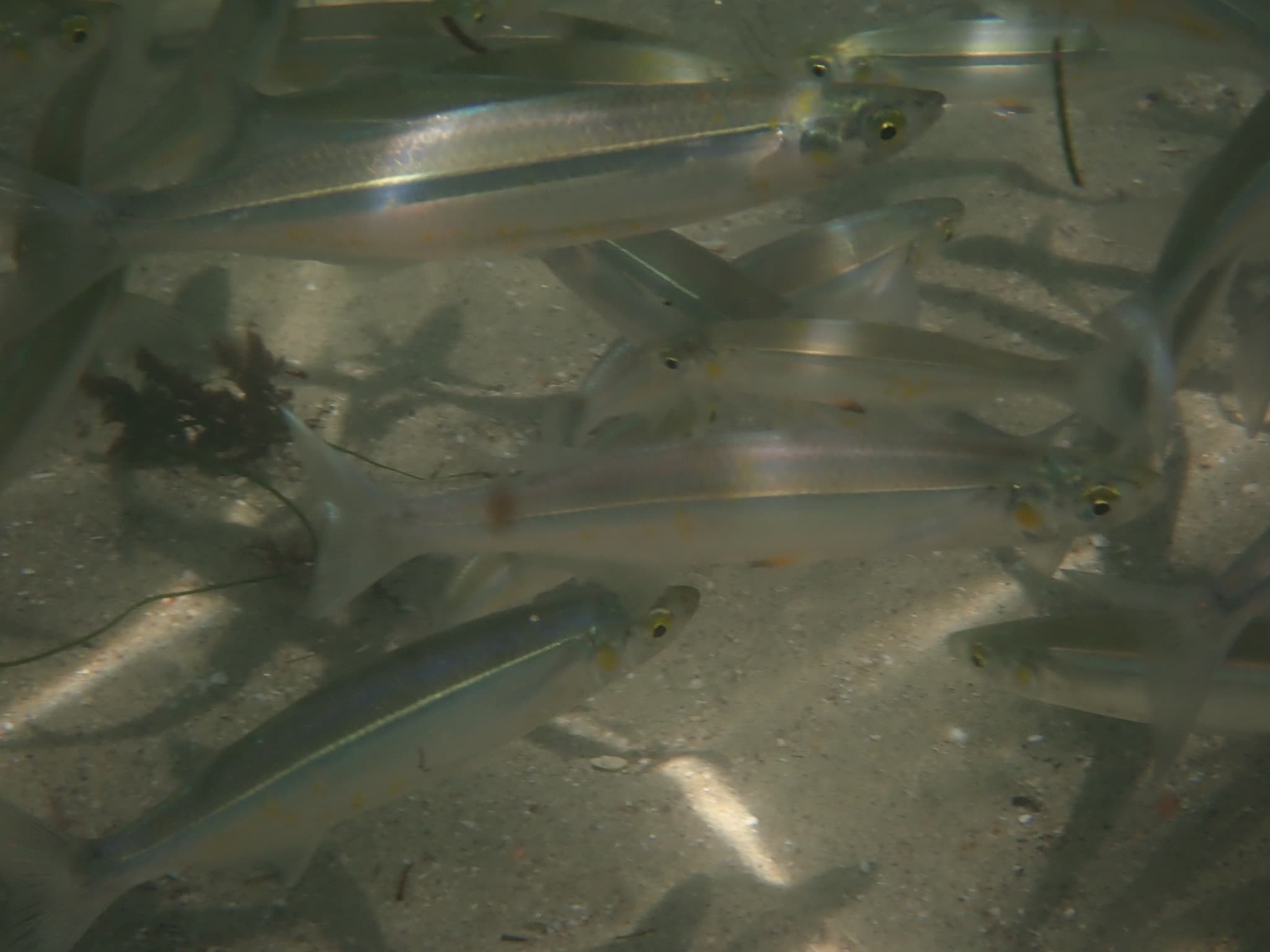
The California grunion is one of the most extraordinary fish in the world, and one of Southern California's most magical natural spectacles. These small, slender, silvery fish are the only fish species known to come completely out of the water to spawn on open sandy beaches. Adults are typically 5 to 6 inches long, with a bright silver body, a bluish-green back, and no visible scales to the naked eye. They have large eyes, a small mouth, and a streamlined body built for the surf zone. While they look unremarkable swimming in the ocean, it is what they do on land that makes them truly unique. On specific nights following full and new moons from March through September, thousands of grunion ride the highest waves ashore, flopping and wriggling on the wet sand under the moonlight in a spawning ritual that has fascinated Californians for generations.
The Moonlight Dance
Grunion spawning runs are timed with astronomical precision. They occur only on the three or four nights following each full moon and new moon, when the highest "spring tides" push water farthest up the beach. The timing is so predictable that the California Department of Fish and Wildlife publishes an annual grunion run schedule, listing the exact dates and times when runs are expected. On a spawning night, the runs typically begin about 15 minutes after the predicted high tide peak and can continue for one to three hours. The female grunion ride a wave onto the beach, quickly drill their tails into the wet sand until they are buried up to their pectoral fins, and deposit their eggs several inches below the surface. One or more males then wrap around the female and release their milt to fertilize the eggs. The entire process takes less than 30 seconds before the next wave washes the adults back into the ocean. The buried eggs incubate in the warm sand for about two weeks, protected from the ocean until the next set of spring tides arrives.
A Perfectly Timed Life Cycle
The grunion's life cycle is a masterpiece of evolutionary timing. The eggs buried in the sand are left high and dry as the tides recede in the days following spawning. Sheltered beneath several inches of sand, the embryos develop rapidly in the warm, moist environment. After about 10 days, the baby grunion inside the eggs are fully developed and ready to hatch, but they wait. The eggs will not hatch until they are agitated by the churning water and sand of the next series of high tides, roughly two weeks after they were laid. When the waves finally reach the eggs and tumble them free, the larvae hatch almost instantly and are swept out to sea. This remarkable adaptation ensures that the baby grunion enter the ocean at the moment of highest tide, giving them the best possible chance of reaching deep water before the tide retreats. Grunion grow quickly, reaching maturity in about a year, and adults may spawn multiple times in a single season, visiting the beach on successive moon cycles.
A SoCal Tradition Under the Stars
Watching a grunion run is one of the most unique and memorable wildlife experiences available in Southern California, and it is completely free. On warm spring and summer nights, families and friends gather on beaches from San Pedro to La Jolla, flashlights in hand, waiting in anticipation for the first grunion to appear in the surf. When the run begins, the beach comes alive with hundreds or thousands of wriggling, silver fish, and the excitement is electric. The California Department of Fish and Wildlife designates specific nights as "observation only" periods during April and May (closed season), when grunion watching is encouraged but catching is prohibited. During open season (June through September for most beaches), licensed individuals 16 and older can catch grunion by hand. No nets, buckets, or tools of any kind are allowed, making it a uniquely challenging and hilarious activity. Organizations like Cabrillo Marine Aquarium in San Pedro host guided grunion programs with naturalists who explain the biology and ecology of these remarkable fish.
Small Fish, Big Concerns
Although California grunion are classified as Least Concern, their unique beach-spawning behavior makes them vulnerable to threats that most fish never face. Beach grooming (the mechanical raking and smoothing of sand that many coastal cities perform to keep beaches looking clean) can destroy thousands of buried grunion eggs if performed during spawning season. Sand replenishment projects that dump dredged sand onto eroded beaches can bury eggs too deeply or alter the sand composition in ways that prevent successful incubation. Artificial lighting from beachfront buildings, boardwalks, and parking lots can disorient spawning grunion and reduce the number of fish that come ashore. Sea level rise and increased storm erosion driven by climate change threaten to reduce the sandy beach habitat that grunion depend on for reproduction. Conservation-minded cities like San Diego have begun implementing grunion-friendly beach management policies, adjusting grooming schedules around spawning season. The citizen science program Grunion Greeters enlists volunteers to monitor and report spawning runs, providing valuable data that helps researchers track population trends. Every person who attends a grunion run and shares the wonder of this experience becomes an advocate for protecting our beaches and the remarkable fish that depend on them.