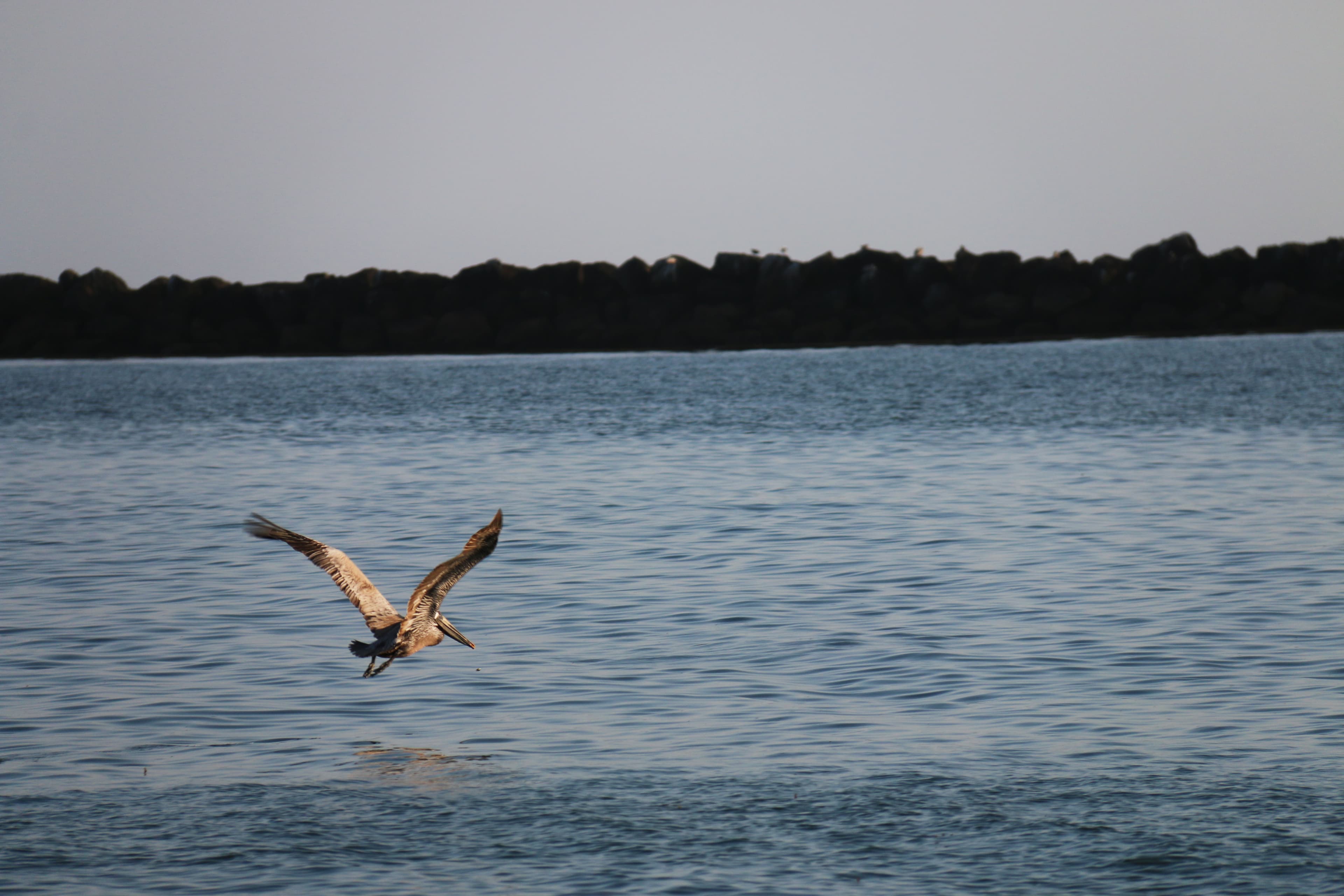
California Brown Pelican
Pelecanus occidentalis californicus
The Diving Fisherman
The California brown pelican is one of the most dramatic and entertaining birds on the Southern California coast. With a wingspan stretching up to 7 feet and a body length of about 4 feet, these large seabirds are impossible to miss as they patrol the coastline in search of fish. Adults have grayish-brown bodies, dark bellies, and a distinctive long bill with an expandable throat pouch that can stretch to hold up to 3 gallons of water. During breeding season, the back of their necks turns a rich chestnut-red, and the throat pouch flushes with bright colors. Their most spectacular behavior is their fishing technique: brown pelicans are the only pelican species that plunge-dive, climbing to heights of 60 feet or more before folding their wings and plummeting headfirst into the water with a tremendous splash to scoop up schools of fish.
From Egg to Sky
Brown pelicans are colonial nesters, meaning they breed in large groups on predator-free islands. In Southern California, the primary nesting colonies are on Anacapa and Santa Barbara Islands in the Channel Islands. Females lay two to three eggs in a nest made of sticks and debris, and both parents take turns incubating the eggs for about 30 days. The chicks hatch featherless and helpless, relying entirely on their parents for warmth and food. Parent pelicans feed their young by regurgitating partially digested fish into the nest, and the chicks reach into the parent's pouch to eat. Young pelicans fledge at about 12 weeks and spend the first year of life learning to fish. Their early dive attempts are often clumsy and unsuccessful, providing amusing entertainment for beachgoers. Pelicans can live 15 to 25 years in the wild.
Coastal Ecosystem Indicators
Brown pelicans serve as important indicators of coastal ecosystem health. Because they feed almost exclusively on small schooling fish (particularly anchovies, sardines, and mackerel), their breeding success is directly linked to the health of nearshore fish populations. In years when anchovy and sardine stocks are low, pelican nesting success drops dramatically, with fewer chicks surviving to fledge. Scientists monitor pelican breeding colonies as a way to track changes in coastal fish populations and overall ocean productivity. Pelicans also play a role in nutrient cycling: their guano (droppings) enriches the soil on nesting islands, supporting unique plant communities that in turn support other wildlife. When pelican populations crashed in the 1960s and 1970s, it was a visible warning sign that something was seriously wrong with the coastal environment.
Comeback Kids of the Coast
The California brown pelican's recovery story is one of the most inspiring chapters in American conservation history. In the 1960s and 1970s, the pesticide DDT (manufactured in large quantities at a plant on the Palos Verdes Peninsula) was discharged into the ocean and entered the marine food chain. DDT accumulated in the fish that pelicans ate, causing a devastating effect: the pesticide interfered with calcium metabolism, causing pelican eggshells to become so thin that they shattered under the weight of the incubating parent. By 1970, only one chick successfully fledged from the entire Anacapa Island colony. The banning of DDT in 1972, combined with protections under the Endangered Species Act, allowed the population to slowly recover. By 2009, the brown pelican had recovered sufficiently to be removed from the Endangered Species List, a milestone that took nearly 40 years of conservation effort.
Pelicans and People in SoCal
Today, brown pelicans are a constant and beloved presence along the Southern California coast. They line up on pier railings at Oceanside, Huntington Beach, and Santa Monica, patiently waiting near fishing stations for a handout or a dropped catch. At La Jolla Cove, they roost on the cliffs alongside cormorants and share the rocky ledges with lounging sea lions. Their spectacular plunge-dives entertain surfers, swimmers, and beachgoers daily. Despite their recovery, pelicans still face ongoing threats from fishing line entanglement, the single greatest human-caused source of pelican injury and death. Every year, rescue organizations like International Bird Rescue treat hundreds of pelicans wrapped in monofilament fishing line. Responsible anglers can make an enormous difference by properly disposing of used fishing line in the recycling bins now found at most Southern California piers and harbors. A small action that takes seconds can save a pelican's life.