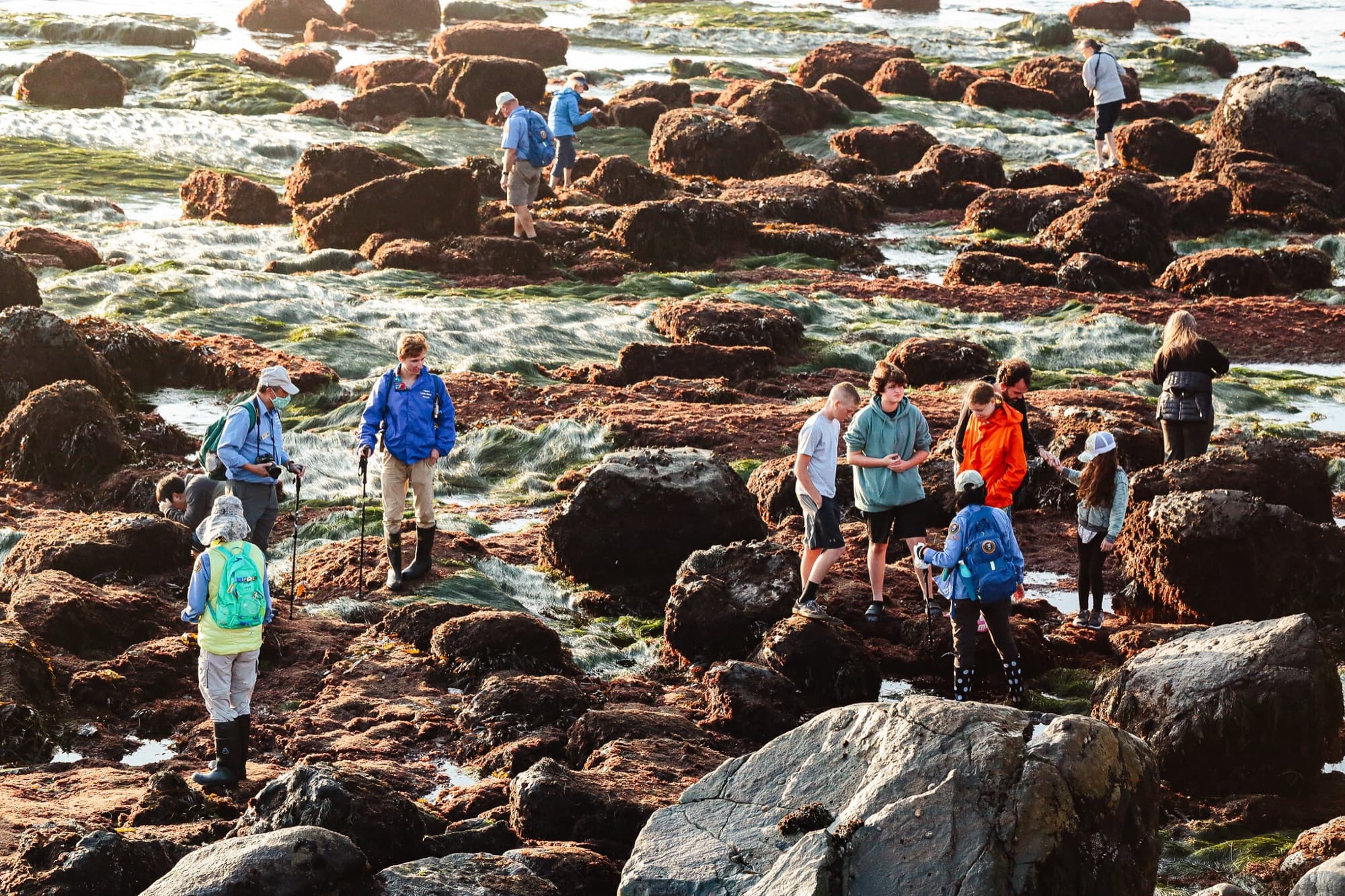
Tide Pools
Rocky intertidal zones along the Southern California coastline
Nature's Living Aquariums
Tide pools are shallow pockets of seawater that form in the crevices and depressions of rocky shorelines when the tide goes out. Think of them as nature's aquariums, refreshed twice a day by the rhythm of the ocean. Despite their small size, tide pools are among the most extreme environments on Earth. The animals and plants that live here must survive crashing waves, scorching sun, freezing nights, and dramatic swings in water temperature and salinity, all within a few hours. The creatures tough enough to call tide pools home are some of the most fascinating and resilient organisms you will ever encounter, and the best part is that you do not need a boat, scuba gear, or any special equipment to explore them. Just a pair of sturdy shoes and a low tide.
SoCal's Best Tide Pool Destinations
Southern California has world-class tide pool habitats scattered along its coastline. Cabrillo National Monument in San Diego is widely considered one of the finest tide pool areas on the West Coast, with ranger-led programs that teach visitors how to explore responsibly. Crystal Cove State Park in Laguna Beach offers a beautiful stretch of rocky intertidal zone surrounded by coastal bluffs. Royal Palms Beach on the Palos Verdes Peninsula is a local favorite with easily accessible pools and a rich variety of marine life. And Abalone Cove Shoreline Park, also on the Palos Verdes Peninsula, is a designated ecological reserve with some of the healthiest tide pool communities in Los Angeles County. Always check a tide chart before you go, as the best time to visit is during a minus tide, when the water drops lower than average and exposes pools that are normally submerged.
A Tough Neighborhood: Species and Survival
Tide pool creatures are organized into distinct zones based on how much wave exposure and air time they can handle. In the highest zone, limpets and periwinkle snails cling to rocks, enduring hours of dry air and baking sun between high tides. In the middle zone, mussels form dense beds that provide shelter for dozens of smaller organisms, while hermit crabs scuttle between pools in their borrowed shells, searching for bits of food. In the lowest zone, which is uncovered only during the most extreme low tides, you will find sea anemones with their flower-like tentacles, sea stars slowly patrolling for mussels to pry open, and sea urchins tucked into hollows they have carved into the rock over years of patient grinding. Each species depends on the others in a delicate web. Sea stars keep mussel populations from taking over all the available rock space. Hermit crabs scavenge dead material, keeping the pools clean. When one species is removed, the whole community shifts.
Threats at the Water's Edge
Tide pools face a unique set of threats because they sit at the exact boundary between land and sea, exposed to pressures from both directions. Trampling is one of the most immediate dangers. When visitors step on organisms, crush algae mats, or flip over rocks without replacing them, they can destroy years of growth in seconds. Collection is another serious problem. It is illegal to remove any living organism from tide pools in California, yet people still pocket hermit crabs, sea stars, and shells, not realizing that each removal weakens the community. Pollution from urban runoff washes oil, chemicals, and microplastics directly into the intertidal zone during every rainstorm. Looking further ahead, sea level rise threatens to permanently submerge existing tide pool habitats, and ocean acidification is making it harder for shell-building species like mussels, limpets, and urchins to form and maintain their protective shells.
Explore Responsibly and Make a Difference
Tide pools are the most accessible marine habitat for young people and families, which makes them a perfect gateway to ocean conservation. The most important rule is simple: look, but do not touch. Your body heat alone can stress a sea anemone, and oils from your skin can harm delicate organisms. Never move or flip rocks, and always watch where you step, stepping only on bare rock surfaces. Beyond responsible visiting, you can make a real impact by joining a tide pool monitoring program. Organizations like the Multi-Agency Rocky Intertidal Network (MARINe) use data from trained volunteers to track the health of tide pool communities over time. You can also lead by example when you visit with friends and family, teaching others the rules of tide pool etiquette. Participating in beach cleanups helps reduce the pollution that washes into these habitats, and advocating for Marine Protected Areas ensures that the best tide pool sites remain protected for future generations. Every time you share what you have learned about tide pools with someone new, you are helping build a community that values and protects these remarkable places.