California's Incredible Tide Pools: A Guide to the Intertidal Zone
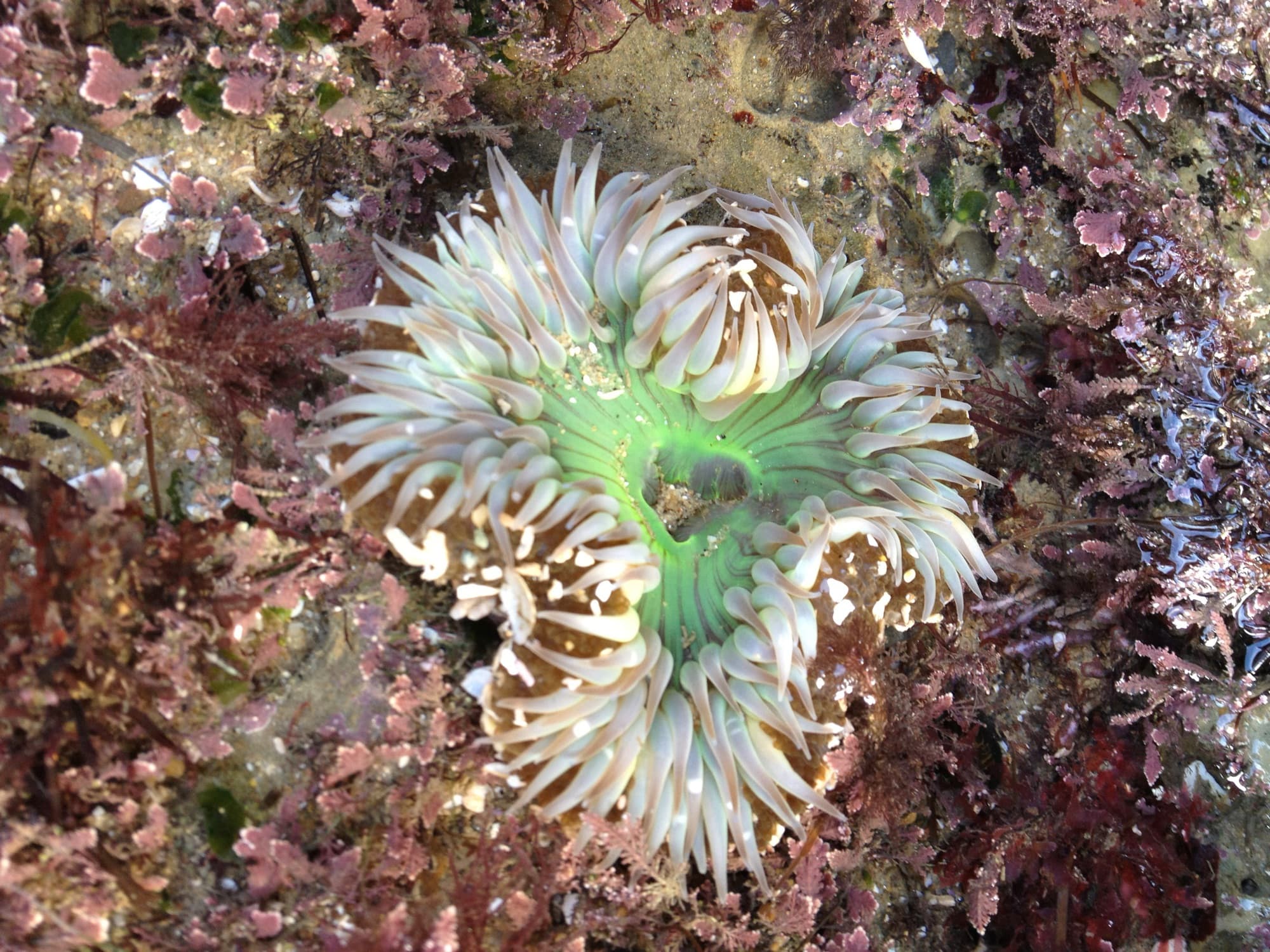
If you've ever crouched down at the edge of a rocky beach and peered into a pool of trapped seawater, you already know the magic of tide pools. They are some of the most crowded, colorful, and competitive ecosystems on Earth, and Southern California has some of the best.
What Is the Intertidal Zone?
The intertidal zone is the strip of coastline between the highest high tide and the lowest low tide. Twice a day, this stretch of coast is submerged under the ocean, and twice a day, it's exposed to air, sunlight, and sometimes scorching heat.
The animals and plants that live here have evolved to survive both worlds. That's what makes them remarkable.
The Four Zones
Scientists divide the intertidal zone into four bands, each with its own residents:
Splash Zone (Supralittoral)
The highest zone, only wetted by ocean spray and the biggest storm waves. You'll find periwinkle snails, limpets, and dark crusts of cyanobacteria here. These creatures can go weeks without being submerged.
High Intertidal Zone
Covered by water only during the highest tides, this zone dries out for long stretches. Look for acorn barnacles. They're everywhere, cemented to rocks in gray-white clusters. When submerged, they open their plates and filter-feed with feathery legs. Shore crabs and small snails are also common here.
Middle Intertidal Zone
This is where it gets busy. Covered and uncovered twice a day, the middle zone is the most species-rich. Watch for:
- Purple sea urchins: spiny herbivores that graze on algae
- Hermit crabs: carrying borrowed shells, always on the move
- Owl limpets: large oval-shaped mollusks that defend their algae "farms"
- Mussels: they cluster in thick mats, held to rock by thin but incredibly strong threads called byssal threads
- Sea lettuce: bright green algae that's actually edible
Low Intertidal Zone
Only exposed during the lowest tides, the ones you need to plan for. This is where the real prizes are:
- Sea stars (starfish): including the ochre sea star, a keystone predator whose removal causes entire ecosystems to collapse
- Giant green anemones: their stinging tentacles are harmless to humans but lethal to small crabs and fish
- Nudibranch sea slugs: some of the most colorful animals on the planet, browsing on anemones and bryozoans
- Spiny lobsters: hiding in crevices during the day, coming out to hunt at night
Why Southern California's Tide Pools Matter
Southern California sits in a region biologists call the "California Current Large Marine Ecosystem," one of the most productive ocean environments in the world. Cold, nutrient-rich water upwells along our coast, feeding enormous food webs from microscopic plankton all the way to blue whales.
The rocky reefs from Malibu to La Jolla are among the most studied intertidal systems anywhere, and for good reason: they're astonishingly diverse and surprisingly accessible.
Popular tide-pooling spots include:
- Crystal Cove State Park (Newport Beach): protected, with excellent ranger programs
- Cabrillo National Monument (Point Loma, San Diego): some of the finest low-zone access in the region
- Leo Carrillo State Park (Malibu): expansive rocky platforms at low tide
- Point Dume (Malibu): sea caves and deep pools at very low tides
How to Visit Without Causing Harm
Tide pools look sturdy but they're fragile. A single careless footstep can kill years of ecological work. Here's how to visit like a scientist:
Step only on bare rock. Never on barnacles, mussels, or algae. They're alive.
Look, don't touch. If you do pick something up (a hermit crab, a snail), return it gently to exactly where you found it.
Leave everything behind. Taking shells, rocks, or animals (even dead ones) is illegal in California Marine Protected Areas.
Check tide charts first. The best tide pools are visible during a "minus tide," when the ocean pulls back beyond its normal low. Apps like Tide Charts & Tides Near Me or NOAA's tide predictions make planning easy.
Don't visit during mating season peaks. Many intertidal species reproduce in spring. Disturbance during this time has outsized effects.
Bring younger visitors close to the pool's edge, not into it. You'll see just as much from the rim without the impact.
The Keystone Species You Need to Know: Sea Stars
In the early 2000s, a devastating disease called Sea Star Wasting Syndrome wiped out up to 80% of ochre sea stars (Pisaster ochraceus) along the California coast. The effect was dramatic: without their primary predator, mussel populations exploded and took over, crowding out the anemones, sea urchins, and other species that depend on open rock space.
Sea stars are a keystone species: remove them, and the whole ecosystem changes. This is one of the most important lessons tide pools can teach: every organism is connected, and the loss of one can cascade through the entire system.
The good news: sea star populations are slowly recovering in some areas, including parts of Southern California.
Your Tide Pool Journal
Next time you visit, bring a notebook and write down:
- Date and time
- Tide height (low, very low, minus tide)
- Location
- Every animal you identify
Over multiple visits, you'll start seeing patterns: which species appear first, which zones respond to seasonal changes, how the population of a particular snail shifts over the year. This is exactly what citizen scientists and professional researchers do. Your observations matter.
How OCINW Is Involved
Orca Child in the Wild monitors local tide pool sites as part of our coastal conservation work. We partner with trained volunteers to record species counts, track signs of pollution and disturbance, and document recovery from events like oil spills and storm damage.
If you'd like to contribute to our monitoring efforts, sign up to volunteer. No experience required, just curiosity and care.